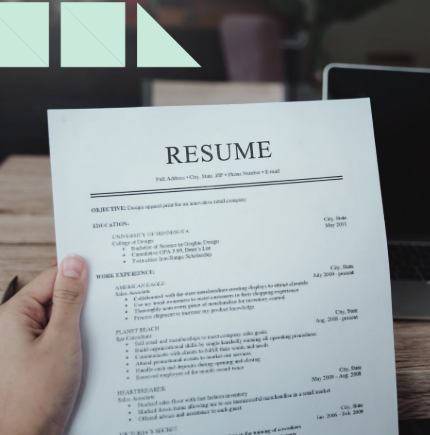
Creating a resume can feel like a lot of work, especially when you’re applying for different types of jobs. You might have one resume saved on your laptop and send the exact same version to every employer. It’s quick, sure, but is it really the best approach?
Not always.
A strong resume should match the type of job you’re applying for. Employers usually spend only a short amount of time reviewing each application, so your resume needs to make the right information easy to find. If you’re using a platform for หางาน or planning to สมัครงาน, customizing your resume can give you a much better chance of getting noticed.
The good news is that you don’t have to create a completely new resume every time. A few smart changes can make your application much more relevant.
Start by Understanding the Job
Before changing your resume, read the job description carefully. Don’t just look at the job title. Pay attention to the responsibilities, required skills, experience, education, and other qualifications mentioned by the employer.
For example, suppose you’re applying for a customer service position. The employer may be looking for communication skills, problem solving, patience, and experience working with customers.
Now imagine you’re applying for an accounting position. In that case, financial reporting, spreadsheets, bookkeeping, attention to detail, and accounting software might be more important.
Your resume should reflect those differences.
Make a short list of the most important requirements in the job posting. Then compare that list with your own experience. Which skills do you have? Which achievements prove that you can handle the job?
That’s where your resume should focus.
Change Your Resume Summary
Your resume summary is one of the first things an employer may read, so don’t waste that space with a generic statement.
Instead of writing something like, “Hardworking professional seeking a challenging opportunity,” try to explain what you actually bring to the specific position.
For a marketing job, you could highlight experience with content, social media, campaigns, or analytics. For an administrative role, you might focus on organization, scheduling, communication, and office management.
Keep the summary short. Three or four sentences are usually enough.
Think of it as your quick introduction. If someone reads only this section, they should still understand why you’re a good match for the position.
Highlight Relevant Skills
You probably have many skills, but that doesn’t mean you need to list all of them.
Choose skills that are connected to the job you’re applying for. If the employer specifically mentions certain skills in the job description and you genuinely have them, consider including those exact terms in your resume.
For example, a graphic designer might highlight:
- Adobe Photoshop
- Adobe Illustrator
- Brand design
- Social media graphics
- Typography
- Visual communication
A warehouse worker, on the other hand, might focus on inventory management, order processing, equipment operation, safety procedures, and teamwork.
The goal isn’t to make your resume longer. It’s to make it more relevant.
Adjust Your Work Experience
This is one of the most important parts of a targeted resume.
You don’t necessarily need to remove every job that doesn’t perfectly match the position. Instead, focus your descriptions on responsibilities and achievements that relate to the new role.
Let’s say you worked as a sales representative and you’re now applying for a customer service position. Your sales experience may include plenty of useful customer communication, complaint handling, relationship building, and problem solving.
Highlight those parts.
Whenever possible, include measurable results. Instead of saying, “Responsible for helping customers,” you could say, “Handled more than 50 customer inquiries per day while maintaining high customer satisfaction.”
Specific results are much more convincing than vague statements.
Use Keywords Naturally
Many companies use applicant tracking systems to scan resumes before a recruiter reviews them. These systems may look for words connected to the job requirements.
That’s why keywords matter.
If a job description repeatedly mentions “project management,” “team leadership,” and “budget planning,” and you have experience with those areas, use those terms naturally in your resume.
Don’t stuff your resume with keywords just to get through a system. It can make your writing sound strange, and a human recruiter still needs to understand it.
Use relevant terminology where it genuinely describes your experience.
Choose the Right Resume Format
Different jobs can benefit from different resume formats.
A chronological resume works well when you have steady experience in the same field. Your most recent jobs appear first, making your career history easy to follow.
A skills focused format can be useful if you’re changing careers, have employment gaps, or want to emphasize transferable skills.
For creative positions, you may have more flexibility with design, but readability should still come first. A fancy resume that is difficult to read won’t help you much.
Keep the layout clean, use consistent headings, and make important information easy to find.
Don’t Forget to Proofread
Before sending your resume, read it carefully.
Look for spelling mistakes, awkward sentences, incorrect dates, inconsistent formatting, and outdated information. Even a small error can make an otherwise strong application look careless.
It’s also worth checking your contact details. Make sure your phone number and email address are correct.
If possible, ask someone else to read your resume. A fresh pair of eyes can often catch mistakes you didn’t notice.
Create a Resume That Fits the Opportunity
A targeted resume doesn’t mean rewriting your entire career history every time you apply for a job. It simply means putting the most relevant parts of your experience front and center.
Start with the job description. Identify what the employer really wants. Then adjust your summary, skills, work experience, and keywords to show that you have those qualities.
Whether you’re using online resources for หางาน or preparing to สมัครงาน, taking a little extra time to customize your resume can make your application feel much more professional.
After all, employers aren’t just looking for someone who needs a job. They’re looking for someone who looks like the right person for this job. Your resume should make that connection clear.