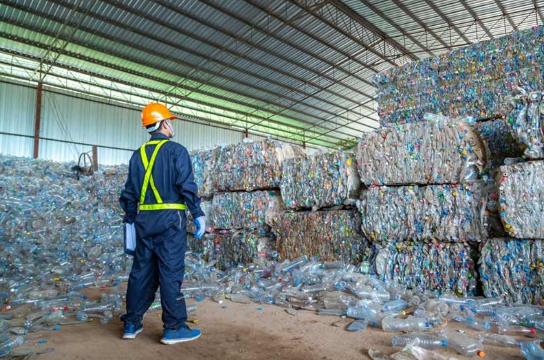
Plastic recycling depends on several stages, and size reduction is one of the most important. Before plastic waste can be processed into reusable material, it often needs to be reduced to a suitable particle size.
Grinding and pulverizing equipment helps transform larger plastic pieces into smaller particles that can be processed more efficiently in subsequent manufacturing stages.
As recycling demand increases in Asia and other regions, manufacturers are focusing on equipment that can provide consistent particle size, reliable operation, and efficient energy use.
Why Plastic Size Reduction Matters
Plastic waste comes in many forms, including sheets, containers, production scraps, films, and molded components. These materials cannot always be processed directly.
Size reduction makes the material easier to handle and can prepare it for recycling, blending, extrusion, or other processes.
The required particle size depends on the next manufacturing stage.
See also: Understanding Large-Format Culinary Gas Systems
Different Types of Plastic Require Different Approaches
Not all plastics behave the same way during grinding.
Material hardness, flexibility, melting characteristics, thickness, and contamination can all affect equipment performance.
A machine designed for one type of plastic may not be ideal for another. Operators therefore need to understand the characteristics of the material being processed.
This is one reason why technical consultation can be valuable when selecting machinery.
Choosing Equipment for Industrial Applications
When comparing plastic pulverizer manufacturers South Korea, buyers should consider more than the machine’s advertised capacity.
Important considerations include:
- Motor power
- Processing capacity
- Particle-size range
- Blade or grinding-disc design
- Cooling system
- Feed mechanism
- Energy consumption
- Maintenance requirements
- Safety features
The machine should be matched to the actual production requirements.
The Importance of Particle Size
Particle size can influence the quality of downstream processing.
Uniform particles may be easier to blend, melt, transport, and process. Excessively large particles can create inconsistencies, while excessive fines may create dust or other handling challenges.
The correct particle size therefore depends on the intended application.
Energy Efficiency
Energy consumption is an important consideration in industrial recycling.
A machine that processes material efficiently can help reduce energy use per unit of output. However, energy efficiency should be evaluated alongside throughput, product quality, maintenance, and operating conditions.
A machine with a lower nominal power rating is not necessarily more efficient if it requires substantially longer processing time.
Maintenance and Wear
Grinding equipment operates under demanding mechanical conditions. Components exposed to repeated contact with plastic materials can experience wear over time.
Regular inspection helps identify worn parts before they affect production quality.
Maintenance procedures may include cleaning, checking fasteners, inspecting grinding components, and monitoring motor performance.
Safety in Plastic Processing
Industrial size-reduction equipment requires appropriate safety procedures.
Operators should receive training and should never reach into machinery while it is operating. Guards, emergency stops, and other safety systems should remain functional.
Dust management may also be relevant depending on the material and processing method.
Supporting a Circular Economy
Efficient plastic processing can contribute to the circular economy by allowing waste material to re-enter manufacturing processes.
Recycled plastic can potentially be used in plastic pulverizer manufacturers South Korea products such as construction materials, packaging components, automotive parts, and consumer goods, depending on material quality and regulatory requirements.
Better processing technology can therefore support broader waste-reduction objectives.
FAQs
What does a plastic pulverizer do?
It reduces plastic material into smaller particles that can be used in subsequent recycling or manufacturing processes.
Does every plastic require the same machine?
No. Material properties and required particle size can vary significantly.
Why is particle-size consistency important?
Consistent particle size can improve the predictability of downstream processing and material handling.
Conclusion
Plastic size reduction is an important stage in modern recycling and manufacturing. Selecting suitable equipment requires consideration of material properties, particle-size requirements, capacity, energy consumption, maintenance, and safety.
By choosing machinery according to the actual production process rather than relying only on advertised specifications, manufacturers can build more efficient and reliable plastic-processing operations.